The Invisible Code Behind Attraction
Attracting your crush is a complex mission. There's no single magic factor—it's a mix of looking good, knowing how to talk, creating chemistry, and yes, smelling good.
Everyone intuitively knows this. If you're lacking in looks, strong chemistry and great conversation can compensate. If your social skills aren't perfect, style and grooming can give you a boost.
But bad scent? A scent that communicates the wrong biological signal? That's the one area almost impossible to recover from—even if you're good-looking, confident, or genuinely funny.
Think back to your own experiences. You've probably met someone attractive… until you got close enough to smell them. Suddenly the chemistry flatlined.
Why? Because smell in a romantic context isn't just "nice" or "not nice." It's biological. It's primal. It's one of the deepest layers of how humans evaluate each other as potential partners.
Smell doesn't just tell someone you're clean. It tells them, on a subconscious level: Are you compatible? Are you healthy? Are you confident or anxious? Are you worth paying attention to?
It's basically invisible ink you spray into the air—an encoded message containing data about your sexual attractiveness. That invisible ink is made of chemosignals. Most people call them pheromones.
Sweat Doesn't Smell "Good"—But It Still Sends Information
Here's the funny part. You might assume pheromones are about smelling good.
But in the most famous study on human scent attraction—the Wedekind Sweaty T-Shirt Study—women literally sniffed the worn shirts of men they'd never met. Sweaty shirts. Not cologne. Not grooming. Just pure biological scent.
And guess what? Women didn't rate the shirts by "pleasant" or "unpleasant." They rated them by attractiveness.
The Wedekind T-Shirt Study (1995)
Some "sweats" smelled extremely attractive. Some smelled neutral. Some smelled like a biological mismatch. The attractiveness had nothing to do with the smell being pleasant—it had everything to do with genetic compatibility, specifically immune-system diversity (MHC genes).
Women were literally picking up subconscious biological data from shirts.
Wedekind et al., Proceedings of the Royal Society B, 1995
So yes, smelling good helps—but smelling biologically compelling is the real advantage.
We Send "Social Signals" Without Speaking
Your body constantly releases tiny chemical messengers—through your skin, breath, sweat, and natural oil glands. These signals shape how people feel around you: whether you seem confident, whether you feel trustworthy, whether someone feels drawn to you or indifferent.
Scientists used to believe humans didn't use pheromones like other mammals. Then the data came in.
The OR7D4 Receptor Discovery
In 2007, researchers at Rockefeller University identified the specific olfactory receptor (OR7D4) that responds to androstenone and androstadienone—two key molecules in human chemical signaling.
Think of these receptors as tiny "social sensors." Some people have sharper sensors, others less sensitive ones—but almost everyone's system picks up something. 30-40% of people have genetic variations affecting their sensitivity to these compounds.
You've felt it before—when someone walks into a room and you instantly feel drawn to them, or when someone looks attractive on paper but something just feels off in person. These are chemosignals at work, long before words or logic get involved.
Keller et al., Nature, 2007
Smelling "Sexy" Is NOT the Same as Smelling "Good"
We all enjoy good smells: your morning coffee, fresh flowers, chocolate chip cookies, clean laundry, a warm oud fragrance after rain.
These smells are pleasant. Comforting. Nostalgic. But here's the key: Pleasant is not the same as sexually compelling.
Your favorite cologne might smell incredible. People might compliment it. You might walk through a room smelling like a five-star hotel lobby. But that doesn't mean anyone is thinking: "I want to get close to this person. I'm attracted to them."
Why? Because pleasant scents signal cleanliness, freshness, comfort, aesthetic pleasure. None of those equal sexual compatibility.
When you smell a home fragrance diffuser, you think: "Wow, this smells amazing." What you don't think is: "I want to make out with my couch."
Colognes make you smell better. But they don't transmit the deeper biological code your brain needs to interpret someone as a potential partner.
That's where chemosignals—pheromone-like molecules—come in. They don't smell like cookies or flowers. They smell like sexual data. Data about compatibility, confidence, hormonal balance, emotional presence. They activate parts of the brain involved in attraction, bonding, social attention, and instinctive responses.
The Four Key Molecules
Androstenone
The "dominance" molecule. Found in male sweat, perceived differently based on OR7D4 genetics.
Effects: Social presence, perceived authority
Effective range: 5-15 mcg
Androstadienone
The "mood modulator." Affects attention and emotional processing in social contexts.
Effects: Enhanced mood, increased focus on social cues
Effective range: 25-50 mcg
Androstenol
The "approachability" molecule. Oxidizes to androstenone after exposure to air.
Effects: Social comfort, perceived friendliness
Effective range: 15-30 mcg
Androsterone
The "reliability" signal. Projects maturity and stability.
Effects: Trust, perceived competence
Effective range: 10-20 mcg
Why Not Combine Both?
If sexual smell is deeper than pleasant smell… and your natural scent already communicates compatibility… and modern fragrance already boosts your surface-level appeal…
Why not smell amazing while transmitting the right biological signals that activate attention, emotional resonance, and instinctive attraction?
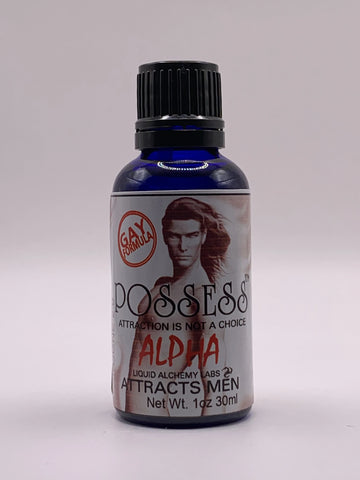
That's exactly what Royal Pheromones was created for. Our formulas stack three layers:
High-End Fragrance
The pleasant signal—you smell great on first impression
Human Chemosignals
The biological signal—subconscious attraction cues
Mood Modulators
The social signal—confidence and presence you can feel
So instead of just smelling "nice," you smell desirable, compatible, confident, magnetic. You smell like someone people want to get closer to—before they even know why.
What Customers Are Experiencing
"I first received this scent as a sample, used it during a business trip, and maybe it's the way that it mingles with my natural chemistry, but I noticed a marked difference right away. Women whom I'd never met before made efforts to introduce themselves, stay in conversation, amplify banter to the edge of what is conventionally professionally appropriate..."
"The results were noticeable enough that I ordered a full vial when I returned home."
"Works everywhere—in professional, personal, social, and date settings. The self effects are real. You don't notice them at first, but when you start interacting with people the leader inside you emerges and takes charge."
"I spray wolf on my neck even when I'm working from home by myself and about to have a group zoom meeting. It helps me lead the meeting effortlessly."
150+ Reviews • 4.7/5 Average Rating
Read All Verified Reviews →
Let's Be Honest About What Pheromones Can and Can't Do
What they WON'T do:
- Replace good hygiene or social skills
- Work like a "love potion"
- Fix deep-rooted relationship issues
- Overcome major personality issues
What they MAY do:
- Enhance your existing social presence
- Improve first impressions in appropriate contexts
- Increase positive social interactions when you're already engaged
- Give you a subtle edge in competitive situations
- Create a positive feedback loop—better responses → more confidence → even better responses
Frequently Asked Questions
Do pheromones work through the vomeronasal organ or regular smell?
The science is still debated. What we DO know: chemosignals work through specialized receptors like OR7D4 in our olfactory system. Whether it's VNO, regular olfactory, or both—the effects are real and documented in peer-reviewed studies. The pathway matters less than the results.
Are pheromone effects scientifically proven?
Yes and no, multiple peer-reviewed studies show effects on mood, attention, and social behavior. However, effects are modulatory and contextual—they enhance existing social dynamics rather than creating attraction from nothing. Some scientists outside the field still debate the definition of pheromones. They claim these chemosignaling compounds don't elicit specific and consistent enough responses to fit the original criteria—which was defined for insect mating behavior. These products are not mind control, obviously.
Why do pheromones work for some people but not others?
Genetic variation in olfactory receptors affects sensitivity. Social context matters enormously—effects are stronger in appropriate social situations. Your natural chemistry and the specific formulation also play roles.
How long do the effects last?
Our slow-release formulas typically last 6-8 hours, depending on activity level and conditions.
What's your guarantee?
90-day money-back guarantee. Use the entire bottle. If you're not satisfied, return it for a refund, less original shipping cost.
Ready to Experience the Difference?
Join thousands who've discovered what the right chemical signature can do.
Explore Our Formulas90-Day Money-Back Guarantee
Scientific References
- Wedekind et al. (1995). "MHC-dependent mate preferences in humans." Proceedings of the Royal Society B
- Keller et al. (2007). "Genetic variation in a human odorant receptor alters odour perception." Nature 449, 468-472
- McCoy NL, Pitino L. (2002). "Pheromonal influences on sociosexual behavior in young women." Physiology & Behavior
- Lundström JN, Olsson MJ. (2005). "Subthreshold amounts of social odorant affect mood." Hormones and Behavior
Community: Join the discussion at PheroTruth.net